

Download the 08.12.26 Q2 2026 Dynamic Investing Insights for advisors’ use with clients
By Kostya Etus, CFA® Chief Investment Officer, Dynamic Asset Management
“So, if I asked you about art, you’d probably give me the skinny on every art book ever written. But I’ll bet you can’t tell me what it smells like in the Sistine Chapel.”
– Sean (Robin Williams), “Good Will Hunting,” 1997
Market Review
We’ve experienced quite the roller coaster ride in the markets through the first half of the year. The first quarter gave us a rough start to the year with global markets posting losses driven primarily by geopolitical conflicts in the Middle East. But markets came back with a vengeance in the second quarter, posting the strongest quarter since 2020, on the back of earnings strength, geopolitical relief and renewed enthusiasm in artificial intelligence (AI). But one of the biggest disruptors has been uncertainty around inflation and interest rates. Given the spike in oil prices early in the year, inflation has crept higher, shifting the Federal Reserve (Fed) from a dovish stance (lower rates to boost economy) to a more hawkish one (increase rates to control inflation).
Despite the noise, global markets are up double digits through halftime of 2026. And while we are used to market rallies, given the last few years of market returns, it’s not the usual suspects leading the charge this year. Market breadth has widened as performance expands past the “Magnificent 7” with notable winners in small-cap stocks and emerging markets, both more than doubling U.S. large caps (S&P 500). Overall, it continues to be a great year for diversified investors.
In terms of what to expect for the second half of 2026, we look at the key drivers of returns to gain insights:
- Inflation. The U.S. Bureau of Economic Analysis (BEA) reported the U.S. Personal Consumption Expenditures (PCE), a leading measure of inflation, at an annualized 3.7% for June 2026. This was a welcome drop from the previous month’s 4.1%, not to mention inflation had increased for four consecutive months prior. More importantly, Core PCE (which excludes the more volatile food and energy costs and is the Fed’s preferred gauge for inflation) also moderated to 3.3%. While still at elevated levels compared to earlier in the year (pre-conflict), it’s reassuring that inflation is coming down at both the headline and core readings.
- Economy. The U.S. Bureau of Labor Statistics (BLS) reported the U.S. non-farm payrolls, a key measure of labor market health, at 57,000 jobs added in June 2026. This was about half of what was expected and a significant drop from 172,000 additions in the previous month. It also marked the third consecutive drop in monthly figures. On a related note, U.S. Gross Domestic Product (GDP), the primary measure of economic growth, expanded at an annualized 1.5% in Q2, below the 2.1% growth in Q1 and well below expectations. A slowdown in the economy and labor market may not necessarily be a bad thing as it reinforces the need to keep interest rates lower for longer.
- Earnings. Corporate earnings may be one of the most fundamental components of market returns. According to Factset, for the second quarter of 2026, with 61% of S&P 500 companies having reported results, the year-over-year earnings growth rate was more than 47%. If that’s where we finished, it would make it the strongest quarter since early 2021. And this is following first quarter’s stellar results with an earnings growth rate of nearly 29%. This growth points to a resilient consumer, a stable economy and an opportunity for the stock market to continue to grind higher.
To summarize, with inflation lower and the labor market showing some signs of weakness, there is a chance that Fed rate hikes could be delayed, or perhaps even avoided, if the data continues in the current direction. Combined with continued strength in corporate earnings, this provides additional tailwinds for the markets looking forward.
But with markets continuing to grind higher, extending their multi-year winning streak, it’s important to remember a few key concepts related to investing.
Asset Class Returns through Q2 2026
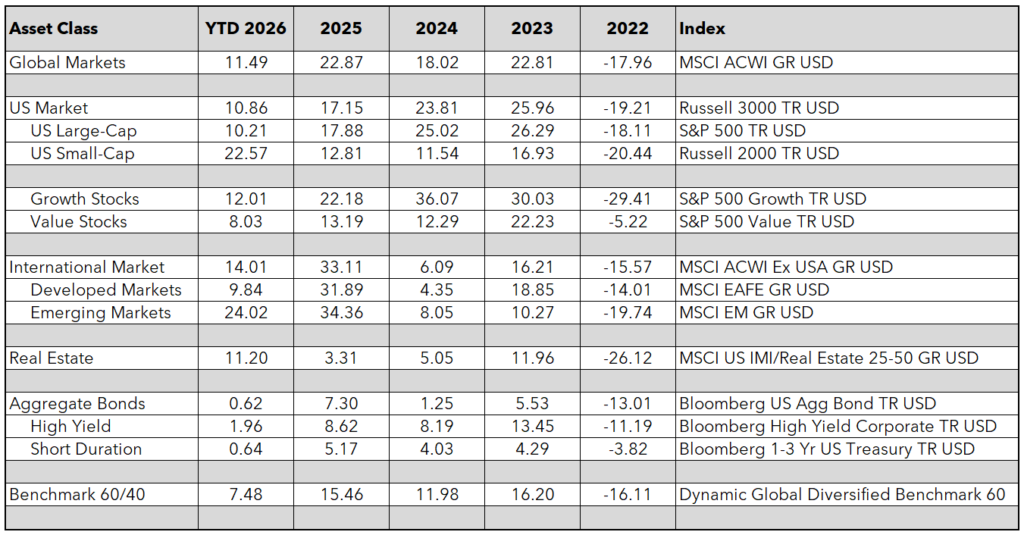
Source: Morningstar Direct as of June 30, 2026. Past performance does not guarantee or indicate future results. Dynamic Global Diversified Benchmark 60 consists of 45% Russell 3000 TR USD, 15% MSCI ACWI Ex USA GR USD, 40% Bloomberg Universal TR USD.
Key Takeaways:
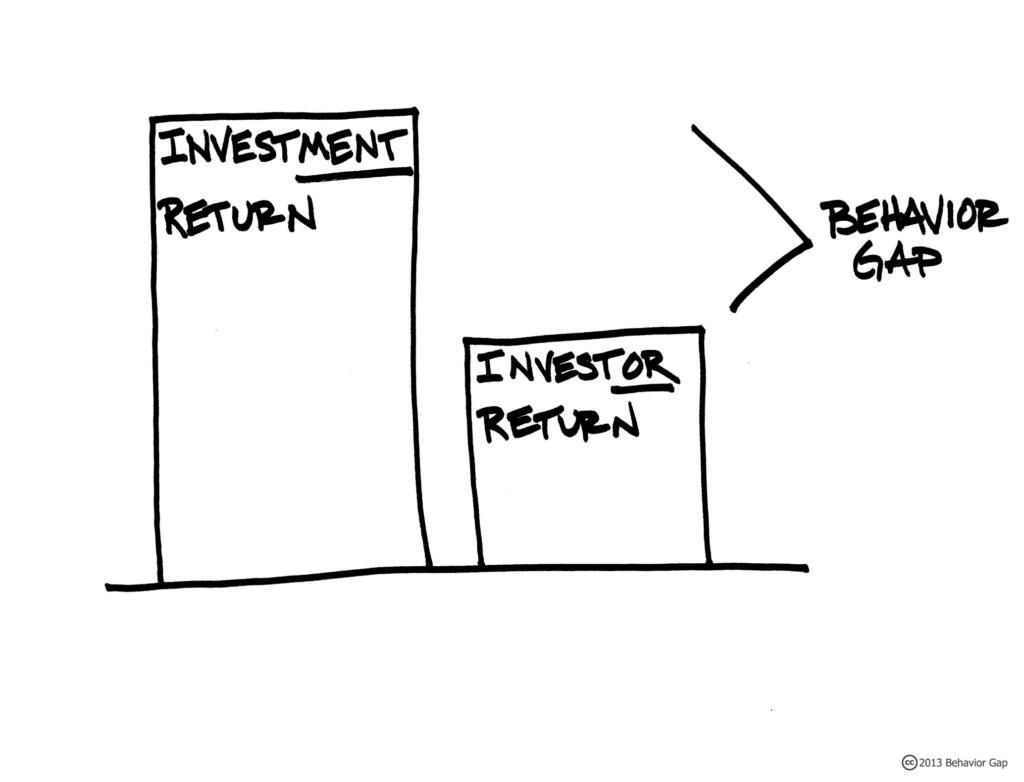
- As market volatility and uncertainty increases, it’s important to mind the “Behavior Gap” when thinking about investments.
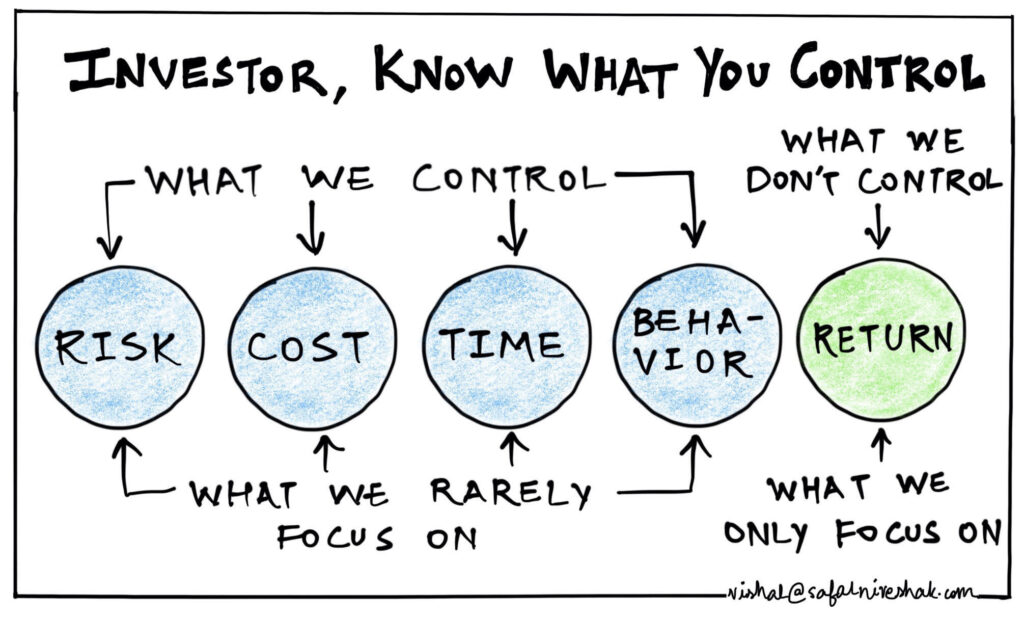
- Knowing what you can and can’t control can help investors make more sound investment decisions.
- One of the most important aspects of successful investing is to be aware of behavioral biases and keeping emotions in check.
The following illustrations help to explain these takeaways.
Bridge the Behavior Gap
Several research studies have shown that financial advisors add approximately 3% per year in value to their clients’ returns. That’s a significant amount, especially when compounded over several years or even decades. But most of that value comes from not only superior asset allocation or security selection, but also from behavioral coaching — the primary value-add.
In fact, there’s a name associated with this value-add, the “Behavior Gap,” and it illustrates how market timing can erode long-term gains. Let’s explore what it means:
- Behavior Gap: It refers to the tendency, or emotional bias, of investors to chase performance. In other words, buying high and selling low can result in meaningful gaps of performance between the returns generated by the investment and the returns gained by the investor.
- Investment vs. Investor Returns: Investors often earn less than their investments due to their behavioral decisions. Closing the behavior gap is one of the most important ways to achieve long-term investment success.
- Stay Invested: Staying invested and diversified for the long-term is the best way to support investment goals. By practicing investment discipline, an investor stays on track to achieving their financial goals.
Behavior Gap
Source: behaviorgap.com
Focus on What You Can Control
The market whipsaws we have experienced this year have in many ways been driven by sensationalized coverage of geopolitical events. Such coverage often leads to bouts of market volatility and shakes up the markets. Emotion, fear, group think and other tendencies that lead to irrational investment behavior were exhibited, particularly in the first quarter.
If everyone around you is in a panic, it’s not easy to stay calm. But one of the best ways to avoid bad investment decisions is to focus on what you control:
- Investors Control Many Things: Investors control how much money they save and spend, the types of investments they select (high risk/low risk) and most importantly, their emotions. As humans, however, we tend to rarely focus on these things.
- Investors Focus on One Thing: Investors instead tend to spend the most time focused on market returns. Returns are certainly important in the long run but are completely out of our control.
- Focus On What You Can Control: Daily stock prices and market fluctuations are not under anyone’s control and are not of significant importance to your long-term investment goals. Investing is a long-term endeavor, and over the long-term — the things you can control — are of much higher importance to investment success.
What Can Investors Control?
Source: https://www.safalniveshak.com/what-we-control/#more-33743
Investment Returns Perception Versus Reality
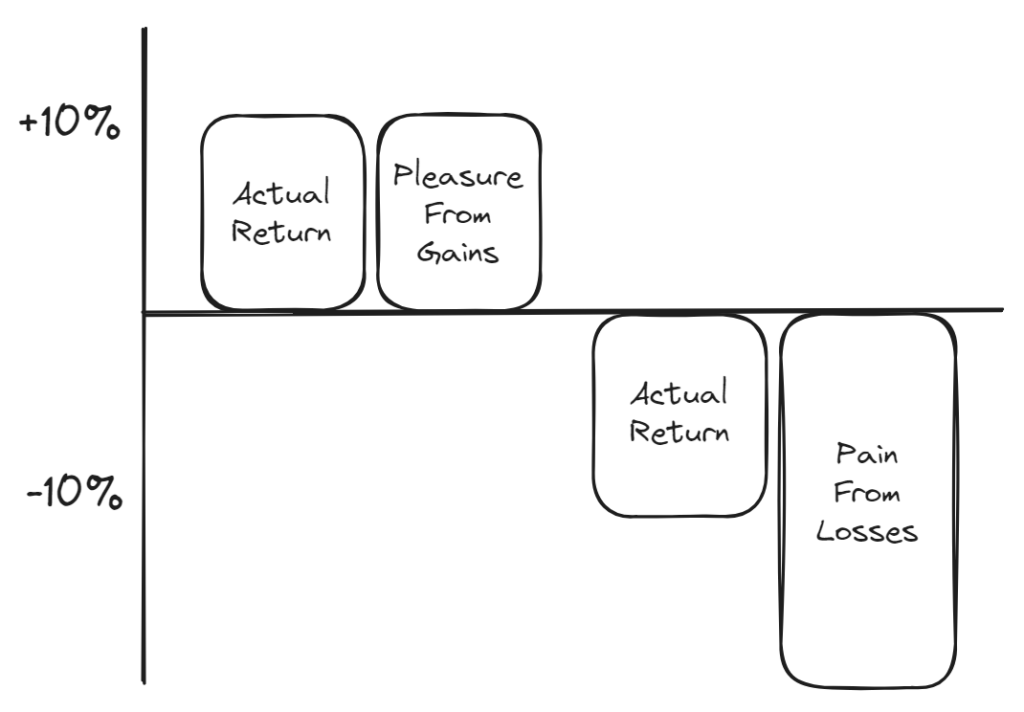
When the market takes a tumble, like we saw in the first quarter, it’s natural to feel some internal pain. After all, loss hurts. There is science behind it. “Prospect theory” is a concept in behavioral economics based on a study done by Daniel Kahneman and Amos Trevsky, for which Kahneman won a Nobel prize in 2002 as the pioneer of integrating psychology into economics.
I sum up their findings with a simple drawing below. Here are the key observations:
- Loss Aversion: Prospect theory shows that humans feel the emotional impact of loss much more than gains. In fact, it is estimated the impact of losses is double that of equivalent gains.
- Investment Implications: While history would suggest that stocks provide the highest returns over the long-term and saving for retirement is a long-term game, loss aversion is powerful enough to impact decision making for most investors. This is why many investors continue to hold significant allocations in bank accounts, which yield almost nothing but give us peace of mind that the money will not be lost.
- Controlling Emotions: It’s healthy to understand and manage risks as best as possible to avoid detrimental losses. But the biggest risk is always not having enough savings in retirement. By understanding our behavioral tendencies and the concept of loss aversion, we can be more conscious of short-term losses and focus more on long-term gains.
Stay diversified, my friends.
What Gaining and Losing 10% in the Market Feels Like
Source: Kostya Etus, CFA
As always, Dynamic recommends staying balanced, diversified and invested. Despite short-term market pullbacks, it’s more important than ever to focus on the long-term, improving the chances for investors to reach their goals.
Should you need help navigating client concerns, don’t hesitate to reach out to Dynamic’s Asset Management team at (877) 257-3840, ext. 4 or assetmanagement@dynamicadvisorsolutions.com.
Disclosures
This commentary is provided for informational and educational purposes only. The information, analysis and opinions expressed herein reflect our judgment and opinions as of the date of writing and are subject to change at any time without notice. This is not intended to be used as a general guide to investing, or as a source of any specific recommendation, and it makes no implied or expressed recommendations concerning the manner in which clients’ accounts should or would be handled, as appropriate strategies depend on the client’s specific objectives.
This commentary is not intended to constitute legal, tax, securities or investment advice or a recommended course of action in any given situation. Investors should not assume that investments in any security, asset class, sector, market, or strategy discussed herein will be profitable and no representations are made that clients will be able to achieve a certain level of performance, or avoid loss.
All investments carry a certain risk and there is no assurance that an investment will provide positive performance over any period of time. Information obtained from third party resources are believed to be reliable but not guaranteed as to its accuracy or reliability. These materials do not purport to contain all the relevant information that investors may wish to consider in making investment decisions and is not intended to be a substitute for exercising independent judgment. Any statements regarding future events constitute only subjective views or beliefs, are not guarantees or projections of performance, should not be relied on, are subject to change due to a variety of factors, including fluctuating market conditions, and involve inherent risks and uncertainties, both general and specific, many of which cannot be predicted or quantified and are beyond our control. Future results could differ materially and no assurance is given that these statements or assumptions are now or will prove to be accurate or complete in any way.
Past performance is not a guarantee or a reliable indicator of future results. Investing in the markets is subject to certain risks including market, interest rate, issuer, credit and inflation risk; investments may be worth more or less than the original cost when redeemed.
Investment advisory services are offered through Dynamic Advisor Solutions, LLC, dba Dynamic Wealth Advisors, an SEC registered investment advisor.
Photo: Adobe Stock